
Minakari
The Exquisite Art of Enameling Metal
Kobra Gheytasi
November 2024
Introduction
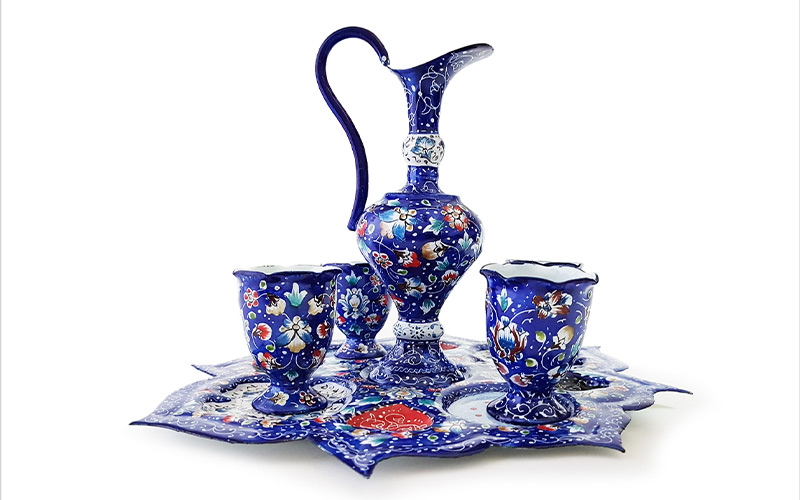
Minakari, also known as Meenakari, is a traditional Persian art form that involves painting and coloring metal surfaces through enameling. This intricate craft, which dates back centuries, is renowned for its vibrant colors and elaborate designs. Originating in Iran and later flourishing in India, Minakari remains a cherished decorative technique used in jewelry, home decor, and architecture.
The Meaning Behind Minakari
The word “Minakari” is derived from two Persian words: “Mina”, meaning paradise or heaven, and “Kari”, which means craftsmanship. Together, they signify an art form that embodies heavenly beauty and intricate craftsmanship (Source: Iran Chamber Society).
History and Evolution
Minakari dates back to the Parthian (247 BC–224 AD) and Sassanid (224–651 AD) dynasties, reaching its peak during the Safavid period (1501–1736 AD) in Iran. The Mughals later introduced it to India, where the art was adapted to embellish jewelry and architecture (Source: Encyclopaedia Iranica).
The Process of Minakari
Creating a Minakari piece involves a series of detailed steps:
- Metal Preparation: A base metal, usually copper, silver, or gold, is shaped into the desired form.
- Surface Cleaning: The metal is thoroughly cleaned to ensure proper adhesion of the enamel.
- Applying Enamel: A finely powdered glass mixture is applied to the surface.
- Firing: The piece is fired in a kiln at 800–900°C, fusing the enamel to the metal.
- Design & Coloring: Artisans paint intricate motifs, including floral and geometric patterns, using metal oxides for color.
- Final Firing & Polishing: The piece is fired again to set the colors and then polished to achieve a glossy finish (Source: Iranian National Museum).
Applications of Minakari
Minakari is used in a variety of artistic creations, including:
- Jewelry: Earrings, necklaces, bracelets, and rings.
- Decorative Items: Plates, vases, bowls, and wall art.
- Architectural Elements: Mosque domes, palace ceilings, and wall panels.
Minakari in Modern Times
Despite being an ancient art form, Minakari continues to thrive, particularly in Isfahan, Iran, and Jaipur, India. Contemporary artisans integrate traditional designs into modern home decor and fashion accessories. Today, Minakari products are highly sought after by collectors and enthusiasts worldwide (Source: The Art of Enamel).
Conclusion
Minakari is more than just a decorative craft—it is a testament to centuries of skilled artistry and cultural heritage. Whether in the form of exquisite jewelry or elaborate home decor, Minakari remains a symbol of timeless beauty and intricate craftsmanship.
References:
- Iran Chamber Society. “History of Minakari in Iran.” http://www.iranchamber.com
- Encyclopaedia Iranica. “Mina Work.” https://iranicaonline.org
- National Museum of Iran. “Persian Enamel Art.” https://www.nationalmuseumofiran.ir
- The Art of Enamel. “Meenakari Craftsmanship.” https://www.theartofenamel.com